

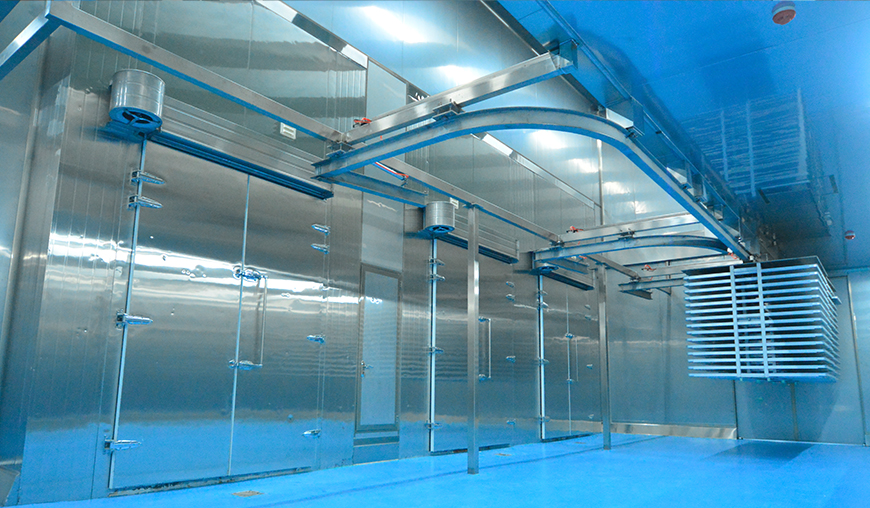
The LG200 vacuum freeze-drying equipment is a widely used model in the freeze‑drying industry,
suitable for laboratories, pilot‑scale plants, and small‑batch industrial production.
This guide provides a comprehensive, SEO‑friendly overview of the LG200 freeze dryer,
including working principle, technical specifications, typical configurations, operating parameters,
and application fields.
LG200 vacuum freeze-drying equipment, often referred to as an LG200 freeze dryer or LG200 lyophilizer,
is a vacuum system designed to remove moisture from temperature‑sensitive products by sublimation.
The designation “LG200” most commonly indicates an approximate 200 kg per batch
water removal or fresh material handling capacity, depending on configuration and industry practice.
As a medium‑capacity freeze dryer, an LG200 vacuum freeze-drying machine is typically used
to bridge the gap between laboratory research and full‑scale industrial production.
It enables process development, pilot validation, and small commercial batches with
reproducible conditions and stable product quality.
The LG200 vacuum freeze-drying equipment operates based on the principle of
water sublimation under low temperature and low pressure.
The process is generally divided into three stages:
Freezing Stage
The product is cooled to a temperature below its eutectic point or glass transition temperature
to ensure that the water in the material solidifies. In an LG200 freeze dryer,
this is usually achieved by shelf cooling with circulating refrigerant.
Primary Drying (Sublimation) Stage
Under high vacuum, heat is gently supplied to the frozen product.
Ice in the material directly converts from solid to vapor (sublimation)
and is captured by the low‑temperature condenser (cold trap).
This stage removes the majority of water content.
Secondary Drying (Desorption) Stage
Residual bound water is removed at slightly higher shelf temperatures
while maintaining controlled vacuum. This step decreases the final moisture content
to very low levels, improving product stability and shelf life.
Throughout the entire cycle, the LG200 vacuum freeze-drying equipment precisely controls
shelf temperature, chamber pressure, and condenser temperature to maintain stable lyophilization conditions.
An LG200 vacuum freeze-drying machine offers several advantages for pharmaceutical, food,
biological, and chemical industries. Below are the main features:
LG200 vacuum freeze-drying equipment is designed to provide accurate control over critical parameters:
From an operational perspective, the LG200 freeze dryer offers:
The LG200 vacuum freeze-drying equipment can be applied in a wide range of sectors
that require gentle drying of sensitive products.
Although specific values may vary between manufacturers,
the LG200 vacuum freeze-drying equipment typically follows similar technical ranges.
The following specifications table provides reference values for an LG200 freeze dryer.
| Item | Typical Specification (LG200) | Description |
|---|---|---|
| Model | LG200 Vacuum Freeze Dryer | Medium‑capacity lyophilizer |
| Water Removal Capacity per Batch | Approx. 200 kg | Amount of ice that can be sublimated per cycle |
| Fresh Material Loading | Approx. 600–800 kg (depending on product) | Typical loading for food or bulk products |
| Usable Shelf Area | 20–30 m² | Total product contact area of all shelves |
| Number of Shelves | 8–12 layers | Varies according to shelf spacing and chamber height |
| Shelf Temperature Range | -50 °C to +70 °C | For product freezing and heating during drying |
| Temperature Uniformity | ±1 to ±2 °C (on shelf) | Ensures consistent drying across batches |
| Condenser (Cold Trap) Temperature | -45 °C to -80 °C | Captures water vapor during sublimation |
| Condenser Capacity | ≥ 250 kg per batch | Should exceed expected water load |
| Ultimate Vacuum | ≤ 5 Pa (5×10⁻² mbar) | No‑load vacuum level in the chamber |
| Working Vacuum Range | 10–200 Pa | Typical pressure range during drying cycles |
| Vacuum Pump Type | Rotary vane + Roots pump (optional) | Combined system for fast evacuation and deep vacuum |
| Refrigeration System | Mechanical refrigeration, cascade system | Configured to reach low temperatures for shelves and condenser |
| Defrost Method | Water or electric defrosting | Used to remove ice from condenser after each cycle |
| Chamber Design | Horizontal cylindrical or rectangular | Optimized for loading efficiency and cleaning |
| Chamber Material | Stainless steel (e.g., SUS304 or SUS316L) | Corrosion‑resistant and suitable for hygienic applications |
| Control System | PLC + HMI touchscreen | Recipe control, real‑time monitoring, and data logging |
| Power Supply | 3‑phase, 380–460 V, 50/60 Hz | Exact voltage depends on regional standards |
| Installed Power | Approx. 60–120 kW | Varies by configuration (pump size, refrigeration stage, heating system) |
| Cooling Water Requirement | As per refrigeration and vacuum system design | Flow rate and pressure depend on local utilities |
| Compressed Air Requirement | 0.4–0.7 MPa (if pneumatic valves used) | For valve actuation and CIP/SIP systems |
| Overall Dimensions | Customized, typically 6–10 m length | Dimensions vary by layout and ancillary systems |
| Weight | Several tons | Depends on chamber size, condenser volume, and frame design |
| Installation Environment | Indoor, well‑ventilated, controlled temperature | Space for maintenance and material handling required |
These LG200 vacuum freeze-drying equipment specifications are representative and should
be adjusted to match the actual machine design and project requirements.
A typical LG200 vacuum freeze dryer consists of the following main components:
Proper selection of operating parameters is essential for efficient and safe use of
LG200 vacuum freeze-drying equipment. The following table shows example ranges
that are commonly used for many products.
| Parameter | Typical Range | Notes |
|---|---|---|
| Freezing Shelf Temperature | -30 °C to -50 °C | Depends on product eutectic point or collapse temperature |
| Product Freezing Time | 2–8 hours | Influenced by product thickness and loading capacity |
| Primary Drying Shelf Temperature | -25 °C to +5 °C | Adjusted to maintain product temperature below collapse point |
| Primary Drying Chamber Pressure | 20–200 Pa | Balancing sublimation rate and product structure |
| Primary Drying Time | 8–30 hours | Longer for thicker or high‑moisture materials |
| Secondary Drying Shelf Temperature | +20 °C to +60 °C | Higher temperature promotes desorption of bound water |
| Secondary Drying Chamber Pressure | 10–100 Pa | Maintains efficient mass transfer |
| Secondary Drying Time | 2–12 hours | Adjusted to reach target residual moisture |
| Final Product Moisture Content | ≤ 1–5 % (w/w) | Depends on product type and storage requirements |
| Total Cycle Time | 12–48 hours | Highly product‑specific |
Users of LG200 vacuum freeze-drying equipment should perform trial runs
to optimize these parameters for each formulation or material.
When evaluating an LG200 freeze dryer, several performance indicators should be considered:
These indicators directly affect product quality, operating cost, and throughput
of the LG200 vacuum freeze-drying equipment.
Compared with hot‑air drying, spray drying, or vacuum oven drying,
LG200 vacuum freeze-drying equipment offers the following advantages:
Selecting a suitable LG200 freeze dryer configuration for a specific application
involves evaluation of technical and operational requirements.
| Option | Basic Configuration | Advanced Configuration | Typical Application |
|---|---|---|---|
| Chamber Design | Horizontal chamber, manual loading | Automatic loading/unloading system | Pharmaceutical mass production requires automation |
| Control System | Standard PLC + HMI | 21 CFR Part 11 compliant, audit trail, remote access | Regulated pharmaceutical and biotech sectors |
| CIP/SIP | Manual cleaning | Integrated CIP/SIP with sterile design | Aseptic production and injectable products |
| Vacuum System | Single rotary vane pump | Rotary vane + Roots booster, vacuum condenser protection | Fast cycling requirements and low operating pressure |
| Refrigeration | Single‑stage refrigeration | Cascade refrigeration for ultra‑low temperatures | Very low product and condenser temperatures |
| Data Recording | Basic trend recording | Comprehensive batch reporting and integration with MES | Production environments needing full traceability |
Choosing the correct LG200 vacuum freeze-drying equipment setup ensures optimal
performance, regulatory compliance, and cost‑effective operation.
Proper installation and maintenance of LG200 vacuum freeze-drying equipment
are essential for long‑term, reliable operation.
LG200 vacuum freeze-drying equipment must comply with relevant safety
and regulatory standards applicable to the user’s industry and region.
Implementation of safety interlocks, emergency stop devices, and
clear operating procedures helps minimize risk during operation
of the LG200 vacuum freeze-drying equipment.
LG200 vacuum freeze-drying equipment plays a critical role in modern
pharmaceutical, food, and biotechnology industries. With its medium capacity,
precise control of temperature and vacuum, and strong adaptability
to various product types, an LG200 freeze dryer is an ideal choice for:
When configured and operated correctly, LG200 vacuum freeze-drying equipment
delivers high‑quality freeze‑dried products with excellent stability,
appearance, and functional performance.
This article provides general, non‑brand‑specific information about
LG200 vacuum freeze-drying equipment specifications and applications,
suitable for use on industry information pages, technical blogs,
and product category directories.
```
Ce site Web utilise des cookies pour vous garantir la meilleure expérience sur notre site Web.
 English
 Español
 Pусский
 العربية



 WhatsApp
 Téléphone
Commentaire
(0)