

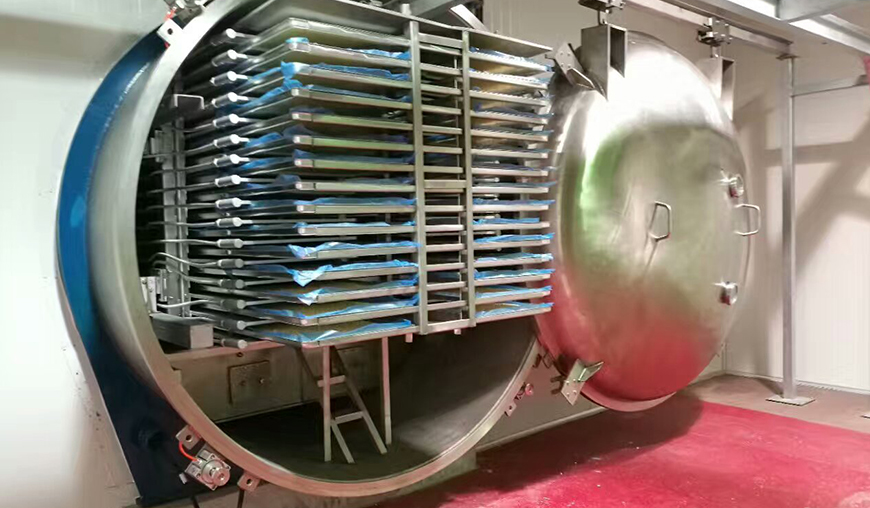
The term High Efficiency LG240 Freeze-Drying Equipment is widely used in the freeze-drying
and lyophilization industry to describe a class of medium–large capacity vacuum freeze dryers designed
for continuous, energy‑optimized operation. This technical guide explains what LG240 freeze-drying
equipment is, how it works, key advantages, common specifications, typical configurations, and how to select
an appropriate system for different industrial applications.
High Efficiency LG240 Freeze-Drying Equipment refers to a category of industrial
vacuum freeze dryers with a nominal loading capacity around 240 kg of wet product per batch
(or a similar tray area rating), engineered for improved energy efficiency, process control, and throughput.
In many markets, the model code “LG240” is used generically to identify a mid‑scale, high‑performance
freeze-drying system used in food, pharmaceutical, nutraceutical, and biotech applications.
While exact configurations differ by manufacturer, LG240 freeze-drying equipment usually shares these
characteristics:
High efficiency LG240 freeze-drying equipment is widely used as a benchmark model in plant design,
pilot scaling, contract manufacturing, and as a central line in small to medium production facilities.
The working principle of High Efficiency LG240 Freeze-Drying Equipment is based on
lyophilization, a process where water is removed from a frozen product through
sublimation under vacuum. The key stages are:
Inside the LG240 freeze-drying chamber, specially designed shelves act as both heat transfer
surfaces and support structures for trays or vials. Refrigeration units cool
the shelves during freezing, and the same thermal system (often using circulating glycol or silicone oil)
supplies controlled heat during primary and secondary drying. A powerful vacuum pump system maintains low
chamber pressure, while a separate condenser coil traps water vapor.
| Stage | Key Parameters | Main Purpose |
|---|---|---|
| Product Loading | Ambient pressure, room temperature | Place product on shelves or in vials, close chamber |
| Freezing | Shelf temperature: -30 °C to -50 °C (typical) Chamber pressure: near ambient, then pumped down | Freeze water to form stable ice crystals |
| Primary Drying | Shelf temperature: -20 °C to +10 °C (product-dependent) Chamber pressure: 0.05–0.5 mbar | Sublimate ice under vacuum, remove bulk moisture |
| Secondary Drying | Shelf temperature: +20 °C to +60 °C Chamber pressure: 0.01–0.1 mbar | Remove bound water, reach final low moisture content |
| Vent and Unloading | Return to atmospheric pressure with sterile or clean gas | Unload stable, dry product ready for packaging |
To qualify as high efficiency, LG240 freeze-drying equipment integrates several design
and control features that reduce energy consumption, improve cycle times, and enhance product quality.
Industrial users choose High Efficiency LG240 Freeze-Drying Equipment to balance capacity,
energy usage, and quality. Key benefits include:
| Benefit | Description | Impact on Operations |
|---|---|---|
| Improved Energy Efficiency | Optimized thermal and vacuum systems reduce kWh per kg of water removed. | Lower operating costs and smaller environmental footprint. |
| Consistent Product Quality | Uniform shelf temperature and precise pressure control. | Reduced batch variability and fewer rejected lots. |
| Scalable Capacity | LG240 size supports pilot to industrial transition. | Ideal for small and medium manufacturers expanding production. |
| Flexible Applications | Suitable for food, pharmaceuticals, nutraceuticals, and biological materials. | One platform can support diversified product portfolios. |
| Automation and Traceability | Programmable recipes, data logging, and batch documentation. | Supports quality systems and regulatory compliance. |
Because of its balance between throughput and footprint, High Efficiency LG240 Freeze-Drying
Equipment is widely used in multiple sectors:
Exact data sheets differ by manufacturer, but typical LG240 freeze-drying equipment
specifications fall within the ranges listed below. Values are indicative and should be
adjusted based on project needs and specific equipment design.
| Parameter | Typical LG240 Range | Notes |
|---|---|---|
| Nominal Loading Capacity | Approx. 240 kg wet product per batch | May also be expressed as water removal capacity or tray area. |
| Usable Shelf Area | 20–35 m² (approximate) | Depends on shelf dimensions and number of levels. |
| Number of Shelves | 8–20 | Configurable depending on chamber height and application. |
| Shelf Temperature Range | -50 °C to +80 °C | Cooling and heating via circulating thermal fluid. |
| Temperature Uniformity | ±1–2 °C (within each shelf) | Measured under empty chamber or defined load conditions. |
| Ultimate Vacuum Pressure | < 0.01 mbar (1 Pa) | Lower ultimate pressure supports shorter drying times. |
| Operating Vacuum Range | 0.05–1.0 mbar (5–100 Pa) | Typical pressure range during primary and secondary drying. |
| Condenser Temperature | -40 °C to -80 °C | Deep freezing enhances water vapor capture. |
| Maximum Ice Condensation Capacity | 150–300 kg per batch | Should exceed expected moisture load for safety margin. |
| Refrigeration Power | 20–60 kW | Depends on shelf area, condenser size, and cycle design. |
| Installed Electrical Power | 50–150 kW | Varies with options such as CIP/SIP and automation. |
| Chamber Internal Construction | Stainless steel (e.g., 304 or 316L) | Surface roughness often optimized for cleaning. |
| Control System | PLC + HMI, recipe management, data logging | Optional SCADA interface and remote access. |
| Power Supply | 380–480 V, 50/60 Hz, 3‑phase (typical) | Adaptable to regional electrical standards. |
| Cooling Water Requirement | Variable, often 5–20 m³/h | Depends on condenser, compressors, and ambient conditions. |
| Compressed Air Requirement | 0.4–0.7 MPa, consumption according to automation | Used for valves, CIP systems, and pneumatic actuators. |
These typical specifications provide a starting point for engineers and project planners comparing
LG240 freeze-drying equipment with other capacities or models.
A complete High Efficiency LG240 Freeze-Drying Equipment package is made up of
several subsystems working together as an integrated unit.
The process executed on a High Efficiency LG240 Freeze-Dryer usually follows a repeated,
recipe‑driven sequence. Proper design of each step is essential for energy efficiency and final product
quality.
Pre‑Cooling of Shelves – Shelves are cooled to the pre‑set initial freezing
temperature before loading or immediately after loading to minimize product warming time.
Loading – Product in trays, vials, or bulk containers is manually or automatically
placed on the shelves. The chamber door is closed and sealed.
Freezing Stage – The automatic system drives shelf temperature down. The product
freezes while chamber pressure remains at or near atmospheric pressure, then the vacuum pump is
activated.
Vacuum Establishment – The system draws down to the target vacuum level. The
condenser is already below freezing to capture vapor during pressure reduction.
Primary Drying – Shelves supply controlled heat to sublimate the ice. Pressure
control valves maintain optimum partial pressure for efficient sublimation.
Secondary Drying – Shelf temperature is gradually increased to desorb residual
moisture without damaging the product structure.
End‑Point Determination – Product temperature, pressure, and sometimes in‑line
moisture or mass measurements indicate that the target residual moisture is achieved.
Backfilling and Unloading – The chamber is backfilled with filtered air, nitrogen,
or other inert gas and returned to ambient pressure. The door is opened and product is unloaded.
Every individual product type – from fruits to injectables – has a customized cycle. The LG240
freeze-drying equipment control system stores and repeats these cycles accurately batch after
batch.
Energy consumption is a major concern in industrial freeze-drying. High Efficiency LG240
Freeze-Drying Equipment is engineered to minimize kWh/kg while maintaining or improving
throughput.
Users of LG240 freeze-drying equipment commonly apply:
| Area | Optimization Method | Potential Gain |
|---|---|---|
| Freezing Stage | Control freezing rate and final temperature precisely. | Improved ice structure, shorter primary drying time. |
| Primary Drying | Increase shelf temperature carefully within product limits. | Reduced cycle time and energy per batch. |
| Vacuum Level | Operate at optimum pressure for given product. | Less compressor and pump work, stable sublimation front. |
| Loading Pattern | Standardize tray filling and shelf loading density. | Uniform drying, reduced over‑drying of light‑loaded areas. |
High quality output is a primary objective when designing and operating LG240 freeze-drying
equipment. Lyophilized products benefit from:
Critical process control parameters (CPPs) include:
High efficiency LG240 freeze-drying equipment usually features continuous data logging for compliance
and optimization purposes. Recorded data may include:
For regulated industries, these records support validation, auditing, and continuous improvement.
Proper installation is essential for safe and efficient operation of High Efficiency LG240
Freeze-Drying Equipment. Key considerations involve:
| Utility | Typical Requirement | Purpose |
|---|---|---|
| Electrical Power | 50–150 kW installed, 3‑phase supply | Drives compressors, pumps, heaters, instrumentation. |
| Cooling Water or Chilled Water | 5–20 m³/h or equivalent | Rejects heat from compressors and condensers. |
| Compressed Air | 0.4–0.7 MPa, clean and dry | Operates pneumatic valves and actuators. |
| Steam (if SIP used) | Pressure and capacity per sterilization cycle | Chamber sterilization in pharmaceutical applications. |
| CIP Water and Drain | Sufficient flow and sanitary drainage | Enables automated cleaning of internal surfaces. |
| Ventilation | Room air changes as per local codes | Removes waste heat and ensures safe working conditions. |
Choosing the right High Efficiency LG240 Freeze-Drying Equipment involves more than
checking capacity. Process engineers and procurement specialists should assess a range of factors.
| Criterion | Considerations |
|---|---|
| Vacuum Performance | Ultimate pressure, pump down time, leak rate, and vacuum stability. |
| Shelf Temperature Range | Capability to reach required freezing and drying temperatures. |
| Temperature Uniformity | Impact on batch consistency, particularly for sensitive products. |
| Condenser Capacity | Margin over expected maximum moisture load. |
| Control System | User interface quality, data handling, recipe flexibility, integration options. |
| Construction Materials | Compatibility with product, cleaning chemicals, and regulatory demands. |
| Validation and Documentation | Availability of typical design documentation and testing protocols, where needed. |
Keeping LG240 freeze-drying equipment in optimal condition relies on proper operation and
maintenance routines. Because of the complexity of vacuum, refrigeration, and control systems, a structured
approach is essential.
Typical maintenance tasks include:
Over its lifetime, high efficiency LG240 Freeze-Drying Equipment can be upgraded:
In industry practice, “LG240” usually designates a freeze-drying equipment size or model group
with a nominal batch capacity around 240 kg of product or an equivalent tray area. It is widely used
as a reference point when comparing different capacities and configurations of industrial freeze dryers.
High efficiency LG240 freeze-drying equipment uses:
The LG240 freeze-drying platform is flexible and suitable for:
Cycle time depends heavily on product type, thickness, loading density, and process design. Many industrial
cycles on LG240 freeze-drying equipment range from 12 to 48 hours, but highly sensitive or
thick products can require longer. Optimization can significantly reduce cycle duration and energy use.
Investment cost is influenced by:
Operating cost is mostly determined by electricity, maintenance labor, and, where applicable, water and
steam consumption.
High Efficiency LG240 Freeze-Drying Equipment plays an essential role in modern food,
pharmaceutical, nutraceutical, and biotech production. It offers a well‑balanced combination of capacity,
energy efficiency, and process control. By understanding the working principle, technical specifications,
typical applications, and selection criteria, engineers and decision‑makers can design and operate LG240
freeze-drying systems that deliver consistent, high‑quality products while optimizing life cycle costs.
```
Ce site Web utilise des cookies pour vous garantir la meilleure expérience sur notre site Web.
 English
 Español
 Pусский
 العربية



 WhatsApp
 Téléphone
Commentaire
(0)