

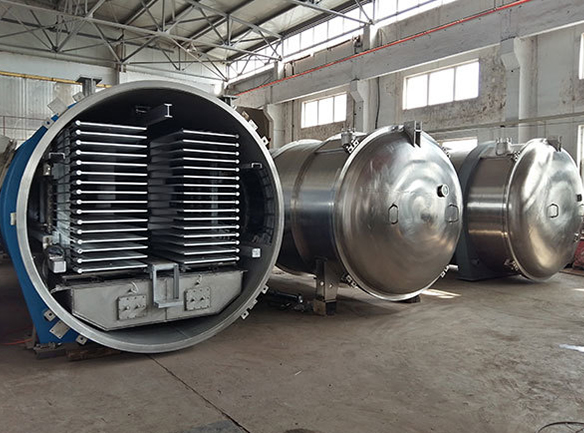
The term Fruit Freeze Dryer LG200 is widely used in the freeze-drying industry to describe a mid‑range
commercial or pilot‑scale freeze dryer with a nominal capacity around 200 kg of fresh fruit per batch.
This extensive guide explains LG200 freeze dryer price ranges, performance characteristics, technical specifications,
benefits, operating costs, and key selection criteria. It is designed as SEO‑friendly reference content
for blogs, directory pages, or industry resource pages.
Note: "LG200" in this guide refers to a capacity class and typical configuration used in
the fruit freeze-drying industry, not to a specific branded model or company. All information is generic and
industry-wide.
A Fruit Freeze Dryer LG200 is a vacuum freeze-drying machine designed primarily for fruits
(such as strawberries, blueberries, mango, banana, apple, pineapple, and mixed fruit snacks) with an
approximate loading capacity of 200 kg of raw material per batch. In many catalogs and
technical sheets, “LG” is an abbreviation for lyophilizer or freeze dryer, while “200” indicates nominal batch capacity.
In process terms, a fruit freeze dryer LG200 is a refrigerated vacuum system that:
Because the process avoids liquid water and high temperatures, fruit color, aroma, nutrients, and structure are
largely preserved, producing light, crispy, long‑shelf‑life fruit pieces.
The “200” designation in Fruit Freeze Dryer LG200 usually corresponds to about
200 kg of raw fruit per batch, but the actual output of dried product and the
throughput per day depend on moisture content, slice thickness, and cycle time.
| Parameter | Typical Range / Value for LG200 Fruit Freeze Dryer |
|---|---|
| Nominal fresh fruit loading per batch | 150–220 kg (commonly referred to as 200 kg class) |
| Typical final moisture of dried fruit | 1–4 % (w/w), depending on product target |
| Moisture removed per batch | 100–150 kg water (for fruits with 70–85 % moisture) |
| Typical drying time per batch | 18–30 hours, depending on fruit type and thickness |
| Typical dried product output per batch | 40–80 kg finished freeze‑dried fruit |
| Possible batches per day | 1–1.5 batches/day under continuous operation |
| Daily dried product capacity | 40–120 kg/day of finished freeze‑dried fruit |
These values vary with recipe, equipment configuration, and operating strategy, but they describe the approximate
scale of an LG200 freeze dryer used for fruit processing.
The Fruit Freeze Dryer LG200 price is influenced by capacity, automation level, material selection,
vacuum and refrigeration configuration, and compliance with food safety standards. Since this guide is generic and
does not promote specific suppliers, all price values are provided as indicative ranges only.
Total investment in an LG200 fruit freeze dryer system usually includes:
| Configuration Level | Description | Indicative Price Range (Ex‑works, generic, no brand) |
|---|---|---|
| Basic LG200 fruit freeze dryer | Manual loading, standard stainless steel, basic PLC control, single‑stage refrigeration, suitable for small commercial workshops.
| Typically from low six figures in USD equivalent; exact value depends on region, material grade, and component sourcing.
|
| Standard/industrial LG200 | Enhanced automation, recipe control, robust vacuum pump system, food‑grade stainless steel, better insulation, suitable for continuous small‑scale production.
| Usually moderate to high six‑figure range in USD equivalent; includes more advanced control and higher refrigeration capacity.
|
| High‑spec LG200 with advanced features | CIP/SIP readiness, detailed data logging, energy‑efficient compressors, premium vacuum pumps, integration with upstream/downstream lines, compliance with stringent regulations.
| May approach or exceed upper six‑figure level in USD equivalent; investment depends heavily on customization and compliance requirements.
|
The LG200 freeze dryer price also varies with shipping costs, local taxes, labor rates,
installation difficulty, electrical configuration (e.g., 380 V/50 Hz vs. 480 V/60 Hz),
and optional features.
When evaluating Fruit Freeze Dryer LG200 performance, producers typically consider
drying efficiency, product quality, energy use, cycle repeatability, and system reliability. The
following KPIs are particularly important for fruit applications.
| Performance Indicator | Typical Value / Description for LG200 Fruit Freeze Dryer |
|---|---|
| Ultimate vacuum level | 10–50 Pa (0.1–0.5 mbar) under no‑load conditions; 30–100 Pa during drying |
| Condenser temperature | −45 °C to −65 °C for efficient water vapor capture |
| Shelf temperature range | −40 °C (freezing) to +60 °C (drying), controlled ramp profiles |
| Temperature uniformity | ±1–3 °C across shelves, depending on design and loading pattern |
| Freezing rate | Product typically frozen to core −18 °C to −30 °C prior to primary drying |
| Primary drying duration | 10–20 hours for typical fruit slices; depends on thickness and formulation |
| Secondary drying duration | 4–8 hours to reach target residual moisture (usually <3–4 %) |
| Batch cycle time | 18–30 hours complete, from loading to unloading |
| Typical energy consumption | Several tens of kWh per batch; exact value depends on system size and insulation |
| Product yield (mass basis) | ~15–30 % of fresh weight (depending on fruit moisture and formulation) |
| Nutrient retention | High retention of vitamins, flavors, and color compared with hot air drying |
A well‑designed LG200 fruit freeze dryer can deliver consistent high‑quality dried products with:
Technical specifications vary among manufacturers, but LG200 freeze dryers usually share a set
of common design parameters such as chamber size, shelf area, condenser capacity, and installed power.
| Category | Specification Item | Typical Value / Range for LG200 Fruit Freeze Dryer |
|---|---|---|
| Capacity | Nominal fresh fruit input per batch | 200 kg (approx. 150–220 kg depending on density and tray loading) |
| Usable shelf area | 15–25 m², depending on shelf dimensions and number of levels | |
| Number of shelves | 8–20 shelves, customizable | |
| Tray size | Commonly 600 × 800 mm or similar industrial tray formats | |
| Temperature | Shelf temperature range | −40 °C to +60 °C (some designs up to +80 °C) |
| Shelf temperature control accuracy | ±1–2 °C | |
| Condenser working temperature | −45 °C to −65 °C | |
| Recommended product freezing temperature | Below −18 °C core before primary drying | |
| Vacuum | Ultimate vacuum (no load) | ≤10–30 Pa (0.1–0.3 mbar), depending on pump system |
| Working vacuum range | 30–100 Pa during primary drying | |
| Vacuum pump type | Oil‑sealed rotary vane or dry screw pump, often with booster pump | |
| Vacuum pumping speed | 100–300 m³/h, depending on configuration | |
| Refrigeration | Refrigeration type | Mechanical refrigeration with one or multiple compressors |
| Refrigerant | Common industrial refrigerants compliant with regional regulations | |
| Installed cooling capacity | Sized to freeze and condense water vapor load for 200 kg fruit per batch | |
| Power & Utilities | Total installed power | 15–60 kW depending on configuration, compressor type, and vacuum system |
| Power supply | Typically 380–480 V, 3‑phase, 50/60 Hz (region‑specific) | |
| Cooling water consumption | Required for water‑cooled condensers (flow rate and temperature depend on design) | |
| Compressed air | Often required for pneumatic valves and actuators | |
| Construction | Chamber material | Food‑grade stainless steel (commonly 304 or 316L) |
| Shelf material | Stainless steel with internal channels for heating/cooling media | |
| Surface finish | Internal surfaces polished to food hygiene standards (e.g., Ra ≤0.8 µm) | |
| Control | Control system | PLC‑based automation with touch screen HMI |
| Process monitoring | Real‑time display of shelf temperature, product temperature (optional probes), vacuum, time | |
| Data logging | Batch recording, trend curves, recipe management for different fruits | |
| Dimensions | Overall machine footprint | Roughly 4–8 m length × 2–4 m width (layout‑dependent) |
| Chamber type | Horizontal cylindrical or rectangular chamber with front door |
A Fruit Freeze Dryer LG200 offers multiple benefits for producers looking to diversify into
premium dried fruit products or to expand small to medium‑scale production.
and natural fruit sweetness.
natural color and visual appeal.
snacks and cereal inclusions.
than in conventional hot air drying.
flexibility for multiple SKUs and recipe testing.
without redesigning the entire line.
batch‑to‑batch quality.
combinations with adjusted recipes.
and packaging systems.
natural, supporting higher price points.
as pieces and inclusions in many formulations.
When assessing Fruit Freeze Dryer LG200 price and performance, it is essential to consider
not only the initial investment but also ongoing operating costs, particularly energy consumption, labor,
maintenance, and packaging.
The main energy consumers in an LG200 fruit freeze dryer are:
| Energy Aspect | Typical Situation for LG200 Fruit Freeze Dryer |
|---|---|
| Installed electrical power | Often 15–60 kW, depending on design; not all devices run at full power continuously. |
| Average power during drying | Lower than installed power due to duty cycles of compressors and heaters. |
| Batch energy consumption | Varies widely; can be estimated based on installed power × operating hours × load factor. |
| Energy intensity per kg dried fruit | Higher than hot air drying; offset by higher product value and quality. |
and compressors.
for cleaning or sterilization (if used).
nitrogen flushing if needed.
Understanding the basic process sequence helps evaluate LG200 freeze dryer performance and
identify optimization opportunities.
or freezing directly inside the freeze dryer if designed for that.
moisture is reached.
While the focus of this guide is Fruit Freeze Dryer LG200 price and performance, it is important
to recognize how LG200 freeze drying compares with alternative fruit drying methods.
| Technology | Main Features | Product Quality | Relative Cost | Suitability for Premium Fruit |
|---|---|---|---|---|
| LG200 Freeze Dryer (vacuum freeze drying) | Low temperature, deep vacuum, sublimation of ice, batch process. | Excellent color, flavor, nutrients, and crispy texture. | High investment and higher energy use per kg, but high product value. | Very suitable for premium snacks and ingredients. |
| Hot air dryer (convective drying) | Heated air flow; continuous or batch; moderate temperature. | Lower flavor retention; color darkening; chewy texture. | Lower investment and lower operating cost. | Suitable for low‑cost dried fruits, not as premium. |
| Vacuum belt dryer | Continuous vacuum drying of fruit purees or concentrates. | Good for powders and granules; less structure for whole pieces. | Medium to high investment; high throughput. | Good for fruit powder production rather than whole fruit pieces. |
| Microwave vacuum dryer | Microwave heating under vacuum; faster drying. | Good color and quality; risk of uneven heating if not well controlled. | Medium to high investment, moderate energy use. | Suitable for some premium dried fruits, depending on product. |
When researching Fruit Freeze Dryer LG200 price and evaluating offers, several technical and
commercial aspects should be analyzed to ensure suitable performance and long‑term reliability.
(water mass removed per batch).
Because fruit characteristics differ greatly (for example, high‑sugar berries vs. low‑sugar apple slices),
many LG200 freeze dryers are offered with configuration options.
Proper maintenance is critical to keep Fruit Freeze Dryer LG200 systems operating efficiently,
protect product quality, and avoid unplanned downtime.
In this context, LG200 is a generic designation often used in industry to indicate a freeze dryer
(or lyophilizer) for fruit with a nominal 200 kg per batch capacity. It is not a trademark
or specific company model in this guide.
An LG200 freeze dryer is usually considered small to mid‑scale industrial. It may be
larger than what a micro‑startup needs, but it suits producers aiming for commercial volumes, multiple product
lines, or export markets. For pure R&D or very small volumes, smaller laboratory or pilot units might be more appropriate.
Typical cycle time ranges from 18 to 30 hours per batch, combining freezing (if done in‑chamber),
primary drying, and secondary drying. Softer, thinner slices may dry faster; dense, high‑sugar fruits may require
longer cycles.
Yield usually falls between 15–30 % of the initial mass, depending on fruit type and original
moisture content. For example, 200 kg of fresh fruit may result in 40–80 kg of finished freeze‑dried product.
Freeze‑dried fruit from an LG200 freeze dryer typically has better color, more intense flavor,
higher nutrient retention, and a crispy texture. Sun‑dried or air‑dried fruit usually has a chewier texture, darker color,
and partial nutrient and flavor loss, but lower cost.
A Fruit Freeze Dryer LG200 represents a practical scale for producers seeking to enter or expand in
the premium freeze‑dried fruit market. Although the LG200 freeze dryer price reflects significant
investment, the machine’s ability to deliver high‑value, shelf‑stable, clean‑label fruit products can generate
attractive returns when matched with appropriate market demand and efficient operations.
By carefully analyzing capacity requirements, technical specifications, operating costs, and product objectives,
buyers can select an LG200 fruit freeze dryer configuration that provides reliable performance,
consistent product quality, and strong commercial potential over the long term.
```
Ce site Web utilise des cookies pour vous garantir la meilleure expérience sur notre site Web.
 English
 Español
 Pусский
 العربية



 WhatsApp
 Téléphone
Commentaire
(0)